


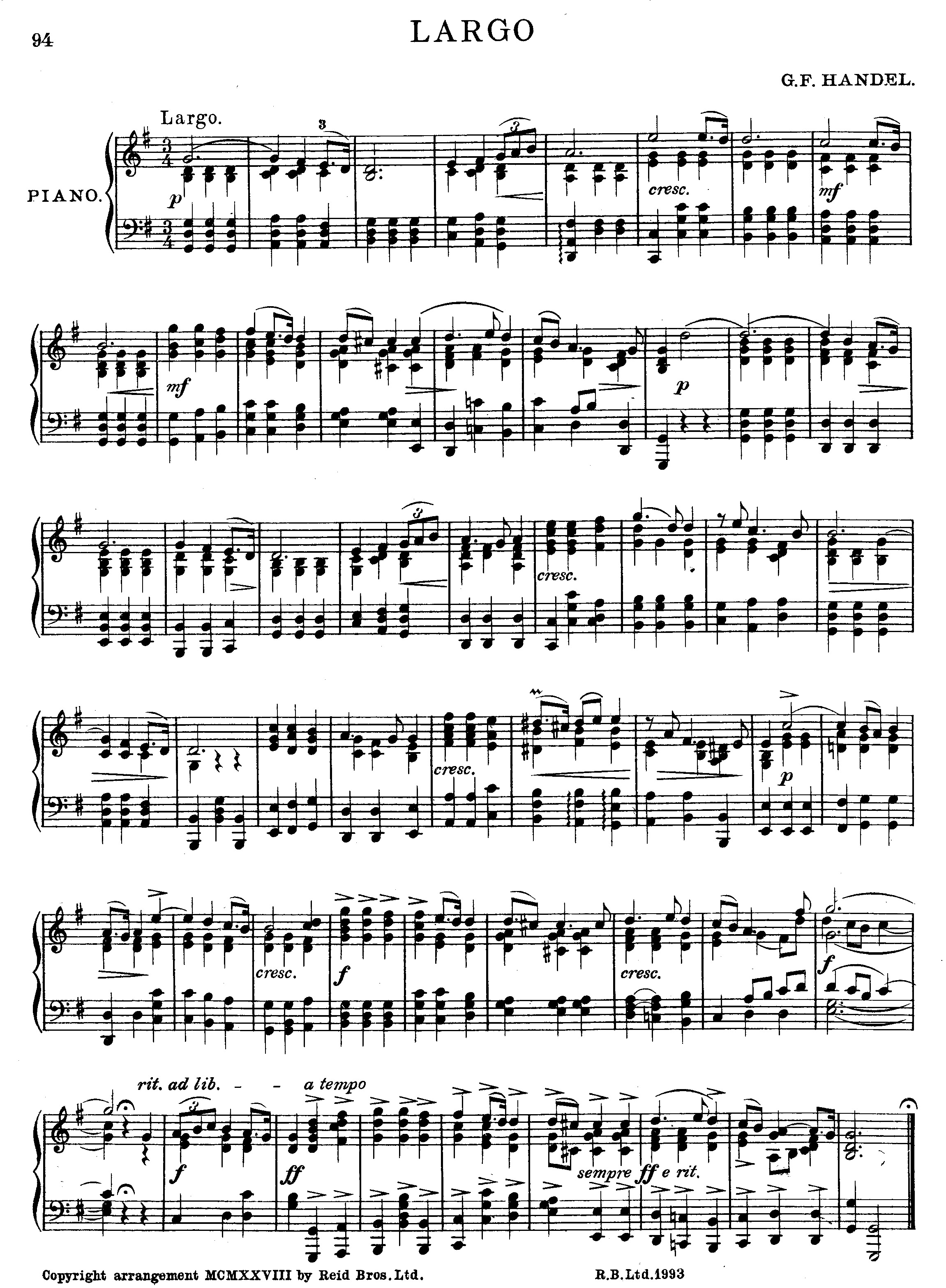

Known as "Handel's Largo," this piece is the opening aria "Ombra mai fu" from the opera Serse (Xerxes) HWV 40, premiered in London in 1738. At the time, Handel was exhausted from theatrical rivalries and competition, having suffered a stroke. This opera was among his first works after recovery, but it closed after just five performances. Yet this single aria survived, was rediscovered in the 19th century, and became one of the world's most beloved melodies.
The setting is ancient Persia. King Xerxes (Serse) sings in admiration of the shade of a plane tree in his garden: "Ombra mai fu di vegetabile, cara ed amabile, soave più"—"Never was a shade so dear, so lovely, so sweet." Originally written to evoke the languid atmosphere of southern lands, it later gained a reputation as a piece of religious dignity when performed instrumentally.
Interestingly, the original tempo marking is actually "Larghetto" (slightly faster than Largo), though "Largo" became the standard title. The original key is F major in 3/4 time, spanning 52 measures. In piano arrangements, the key is to make the melody sing beautifully above rich, sustained harmonies. The left hand plays a crucial role in creating depth, and pedaling significantly affects the overall resonance. The melody was adapted from Giovanni Bononcini's 1694 setting, which itself drew from Francesco Cavalli's 1654 version—three composers setting the same libretto by Nicolò Minato.
(Source)
